


Aneeq Akram
October 12, 2026
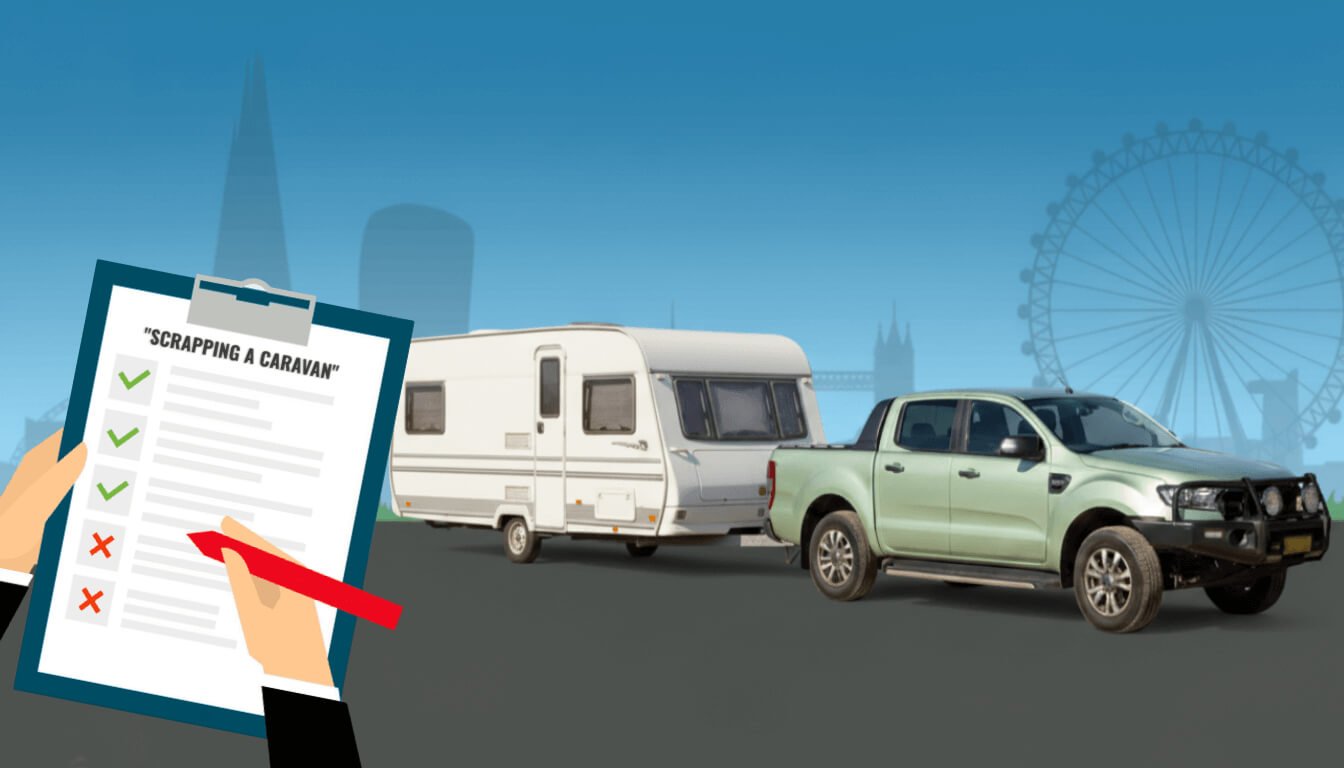
Scrapping a caravan is not always the same procedure as scrapping cars, so one must follow a series of steps to avoid any financial loss and legal issues. Whether your caravan is static or touring, and even old, damaged, or no longer needed, in this guide we will explore how to scrap a caravan legally.
Following the given steps, one can scrap a caravan smoothly and legally while avoiding any financial loss and contributing to the environment.
Firstly, you need to identify the route that best suits your situation because the scrapping route will be different based on the type of caravan. If your caravan is classified as a vehicle (like a motorhome) or registered as a vehicle, it may require formal scrapping similar to car scrapping. On the other hand, the procedure will be different for static caravans, non-registered units, or non-vehicle structures.
Before scrapping, assess the overall condition of the caravan and decide whether the caravan can be sold in parts (appliances, wheels, or fittings), donated, sold as scrap, or as a project. If it’s beyond repair, not worth selling, or not fit for donating, then scrapping is often the best option.
For caravan value estimation, you can check their current prices in the market, consult a specialist, get multiple quotes from various caravan breakers or salvage yards, or even use online calculators.
Find a reputable and licensed buyer to work with. If your caravan is classified as a vehicle or registered as a vehicle, then try to prefer to work with an ATF to scrap a caravan because the Environment Agency licenses them to dismantle and recycle vehicles. Moreover, only an ATF can issue a Certificate of Destruction (CoD) or similar documentation, which frees you from the future responsibility for the caravan.
On the other hand, it is best to go with a licensed recycling centre or contractor for static caravans, unregistered caravans, or non-vehicle structures.
After sorting out the authorised and reputable buyers, contact them one by one to get the quote and compare the offers you get to go with the best one that suits you.
A good buyer can offer:
Before handing over the caravan, remove personal belongings (such as furniture, decorations, and equipment) because buyers usually take no responsibility after the caravan is processed. To avoid any delay, be prepared and gather documentation such as the V5C logbook (if the caravan is motorised or registered with DVLA) or proof of ownership, and photo ID.
Many dealers, scrapyards, or recycling centres offer free collection services, whether the caravan is static or touring. If the free transportation is not included in your case, you have to arrange a pickup or deliver the caravan yourself. But if they offer free transportation, then schedule the pickup time and stay at the mutually agreed time and place.
After the collection of the caravan, get paid the agreed-upon payment in your desired way of money transfer. It’s also recommended to keep the payment agreement in writing (email or invoice), and by doing so, you avoid future disputes.
If your caravan is motorised or DVLA-registered (for example, as a trailer or motorhome), don’t forget to get a Certificate of Destruction or similar confirmation. Keep any provided receipt and CoD that proves that the caravan has been disposed of legally. The ATF will usually complete the necessary DVLA notifications, but you should also notify the DVLA yourself using their website or by sending the relevant section of the V5C so that they can update their records. Otherwise, you could remain liable for tax or penalties.
If the caravan is not registered or classified as a vehicle, ask for a written waste transfer note or disposal confirmation. Save the documents as waste transfer notes, which should be kept for at least two years.
If the caravan was insured, contact your insurance provider, give them the CoD or confirmation document (that proves the caravan was scrapped), and ask them to cancel the policy, which will save you from any future charges or complications.
Scrapping a caravan is straightforward, but it involves a few more safety and legal steps than scrapping a car. When you scrap it with proper steps and with a plan ahead, then this process could result in both financial and environmental benefits.